The Templo Mayor is not as Lame as you Think
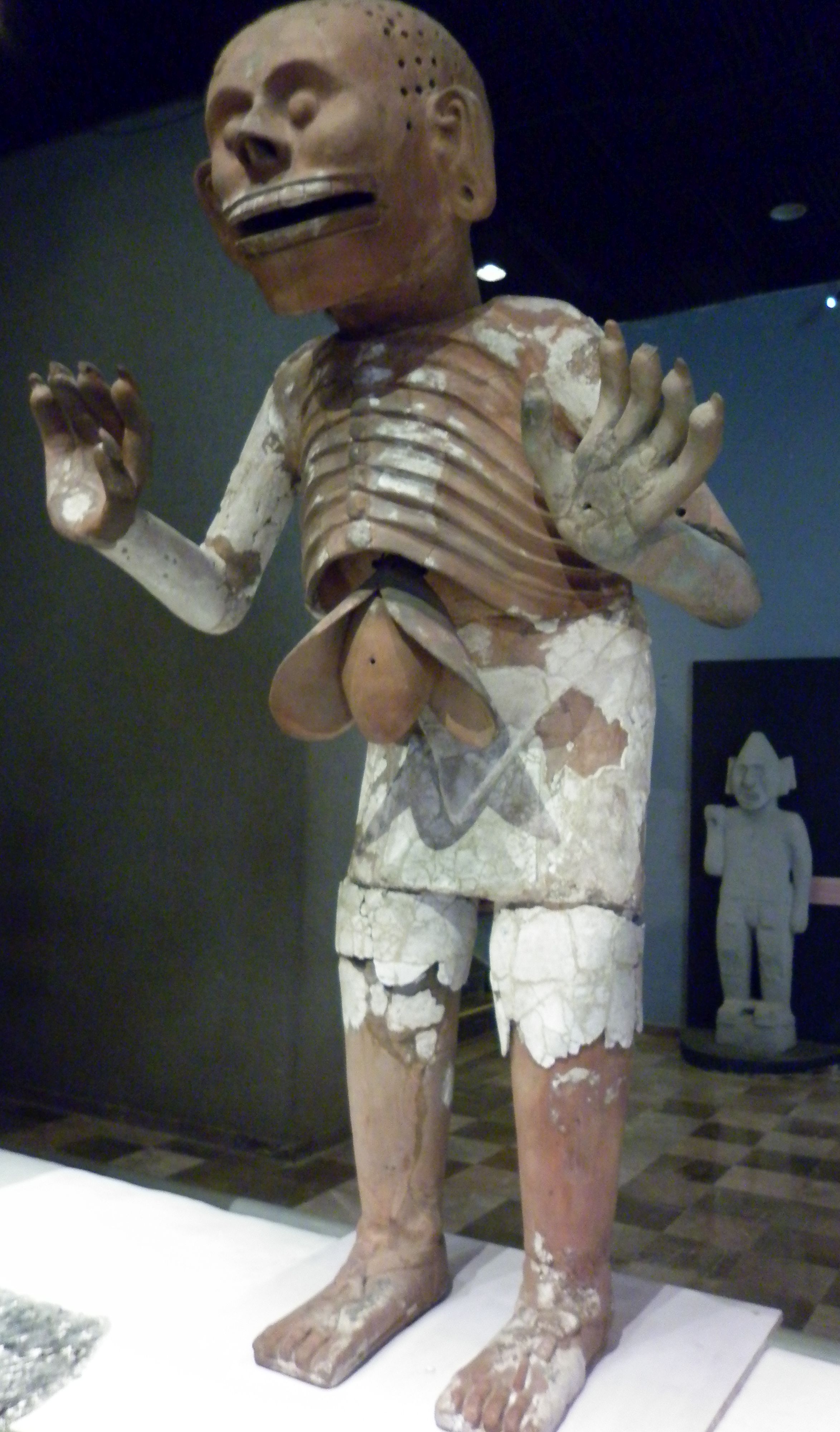
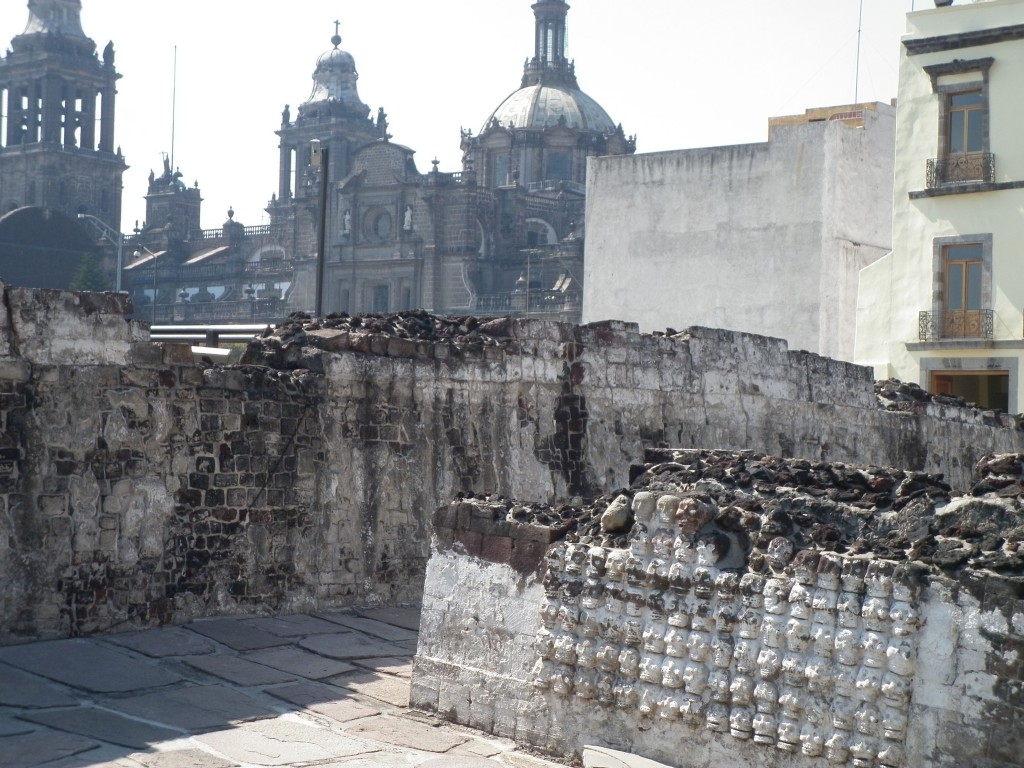
Or at least not as lame as I thought. In general ruins are just that — ruins. they don’t hold any kind of real draw after you see four or five or six of “most important pre-Colombian archeological sites in Mexico.” But did you know that the Templo Mayor actually took up the place that it occupies now along with all the space occupied by the Mexico City Metropolitan Cathedral?
If you look at the smaller chapel you on the right-hand side of the cathedral you will notices it’s stones are red and distinct from other sections, that’s because this is the oldest part, made with repurposed stones from the Templo Mayor and other structures.
And did you know that around the year 1900 they tunneled a drainage ditch right through the middle of it, ostensibly destroying a six-foot wide gap in one of the country’s most important historical sites.
The land where the Templo Mayor was built has had too many incarnations to count. Atop it was built the homes of famous conquerors the Ávila brothers after the fall of Tenochtitlán. When they were sentenced to death it was covered with salt so nothing would grow there as part of their punishment.
It was used as trash heap after that and was home to the Librería Rebredo in 1928, that was transferred the famous Porrúa family in 1934. Fate stepped in in 1978 when the huge monolith of Coyolxauhqui was found and the temple’s ruins began to be excavated, thus starting a 25-year project to uncover this majestic building.
Even the Aztecs kept covering and rebuilding the temple (seven times), adding new, fancier facades, new altars to the god or ruler of moment and more space for the increasing number of elites that roamed its halls, not to mention rebuilding it year by year as the city built on a lake slowly sank into the ground.
Along with the Coyolxauhqui monolith they found one of Tlaltecuhtli, each almost complete intact and Coyolxauhqui with traces of its original paint.
The Casa de Aguilas, the room where the Aztec warriors held religious ceremonies and made sacrifices, has these incredibly intricate stone benches, carved with images from their mythology and the two statues found there — Mictlantecuhtli (seriously what a name), the god of death and an Aguila Aztec warrior — are so well preserved they look like they were made only a hundred or so years ago.
The museum has your basic over-the-top amount of pottery and clay figurines on display, but they’ve also filled several showcases with objects from the 18th, 19th and 20th century — all odds and ends found at the site. There’s also a cool map of the city’s historic center on the first floor which shows were important artifacts have been found.
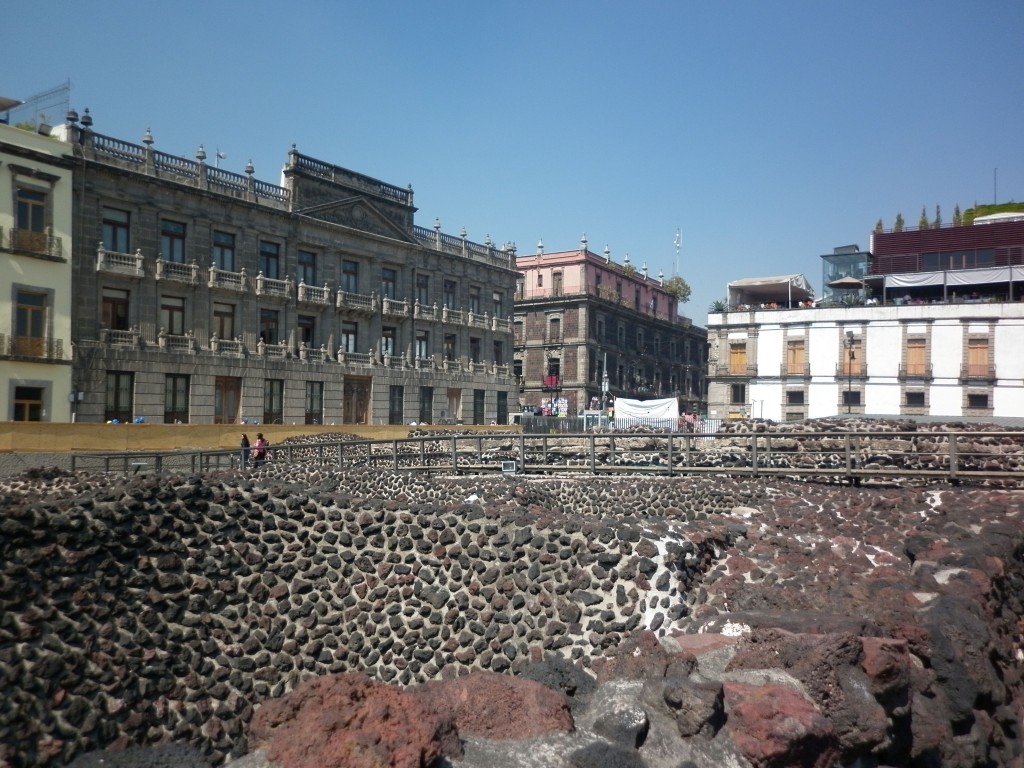
For me, one of the most interesting parts of my visit was that you can stand in the middle of the Templo Mayor on their elevated walkway and look around you and the city crowds in on every corner.
To the left you hear the drumming from the Zócalo, to the right the sound of a recorded English-language learning program being sold on the street, and in front of you the majestic downtown cathedral, looking smug and knowingly at the Templo Mayor, as if to say “Looks like I won.”
To think that the Spanish took the stones of sacred Aztec buildings and built colonial style churches and homes with them. Moctezuma must be rolling in his grave.
All that said, I think the Templo Mayor is worth it, and if you get bored you can always walk out to the zócalo and imagine it filled with Aztec peddlers and protesters … trust me, it won’t be that hard.